
Latest Products




Contact Us
- 18 Yangdong Road, Xinzhuang Town, Changshu, Suzhou City, Jiangsu Province
- sz_shf@126.com
- +86-512-66836175
Why Choose Us?
Professional Team
Founded in April,2007, Suzhou Shengfa Aluminium Industry Co.,Ltd. Have 15 years experience in aluminium extrusion profiles. We has been a leading aluminum extrusion, machining and surface treatment manufacturer in China.
Accept ODM/OEM service
Can provide aluminium extrusion profiles, semi-finished components, semi-finished systems and finished products. Shengfa provides OEM and ODM services according to DIN EN, ASTM, GB/T standards and customer requirements.
High Quality
Shengfa acquired Jiangsu Province Quality and Integrity Double Guarantee Demonstration2019, acquired ISO9001 International Quality System Certification in May, 2015, acquired IATF 16949 International Quality Systerm Certification in Jul.,2021.
Advanced Equipment
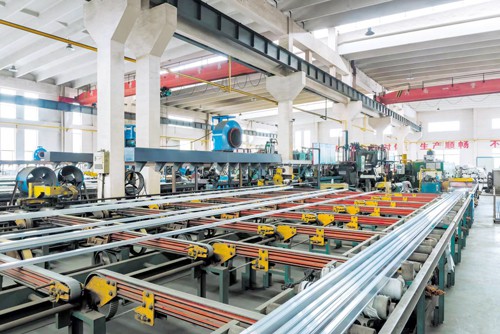
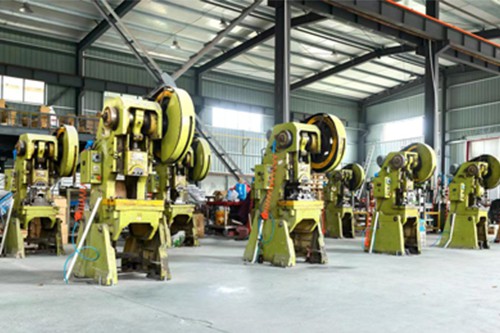
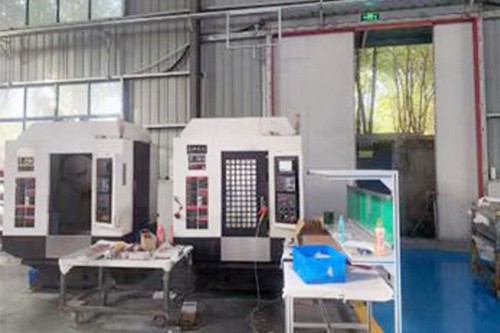
Shengfa has more than 3,000 dies, 630MT, 830MT, 1250MT,1600MT, total 4 extrusion lines, 2 sets of sandblasting machines, 6 sets of plane sawing machines, 3 sets of double end sawing machines, 1 set of 4.5m CNC machine, 2 sets of 850mm CNC machines, 8 sets of punching machines, 2 sets of tapping machines and 1 oxidation line.
Special profiles are basically sections with a shape or set of properties that differ from those of general-use, universal rolled steel. Special profiles are used for specific operating conditions, which, in fact, determine their design, as well as physical and mechanical properties. Special metal profiles are manufactured from carbon, alloyed and stainless steels, aluminium, copper and other non- ferrous metals and alloys.
 Industrial Special Profiles
Origin: Suzhou, Jiangsu Province, China. Shape: various. Alloy or not: aluminum alloy
Add to Inquiry Roll Screen
Roll-up or poster stand, display stand, advertising industry is also called pull-up frame, easy-pull frame, easy-pull roll, etc., is a set up publicity poster.
Add to Inquiry
Special profiles offer several advantages:
Lightweight
Aluminum is a lightweight metal, making special profiles ideal for applications where weight is a concern, such as in transportation, machinery, and construction.
Corrosion resistance
Aluminum forms a natural oxide layer that provides excellent protection against corrosion, making special profiles suitable for use in outdoor environments and humid conditions.
Versatility
Special profiles can be extruded into a wide variety of shapes and sizes, allowing for design flexibility and the ability to create complex structures.
Durability
Special profiles are strong and durable, with a high strength-to-weight ratio. They can withstand heavy loads and various environmental stresses without compromising their structural integrity.
Easy to fabricate
Special profiles can be easily cut, drilled, and machined, making them easy to work with and integrate into various projects.
Low maintenance
Special profiles require minimal maintenance, as they do not rust or deteriorate over time, reducing the long-term costs associated with their use.
Recyclable
Aluminum is a highly recyclable material, making special profiles an eco-friendly choice for sustainable construction and manufacturing.
Cold rolled special shapes and sections are produced by forming round wire rod using a continuous rolling process at an ambient temperature. This is an extremely efficient method for producing smaller profiles. The cold process allows us to offer an excellent surface finish on strong, durable, and ductile pieces.
The cold drawn process incorporates a precision reduction of the cross sectional area of pre-rolled pro-files or wire rod that is drawn through a series of one or more dies at an ambient temperature. Cold drawn stainless steel sections offer special profiles required by our customers. Tolerances are tight with improved surface conditions. So they are reducing the need for more machining during finishing operations. Hence, special cold drawn profiles are ideal for gears, keyways, pumps parts, turbines, and many other industrial needs.
How to Improve the Quality of Special Profiles
The working belt must be ground and polished before the mold is put on the machine. The working belt generally requires polishing to the mirror surface. Before assembling the flatness and perpendicularity of the mold work belt, the industrial aluminum profile should be inspected. To a certain extent, the quality of nitriding determines the polishing finish of the work belt. The mold cavity must be cleaned with high-pressure gas and a brush, and there must be no dust or foreign objects. Otherwise, the work belt will be easily pulled down by the metal flow, and the extruded profile products will appear rough or scratched.
During the extrusion production, the mold holding time is generally about 2-3 hours, but not more than 8 hours, otherwise, the hardness of the nitride layer of the working belt of the mold will be reduced, which will result in the rough surface of the profile and serious industrial aluminum profile. Will cause defects such as scribing.
Adopt the correct alkali washing (mold cooking) method. After the mold is unloaded, the mold temperature is above 500°c. If it is immediately immersed in the alkaline water, the temperature of the alkaline water is much lower than the mold temperature. If the mold temperature drops rapidly, the mold is prone to cracking. The correct method is to wait for the mold to be unloaded and place the mold in the air to 100°-150°c and then immerse it in alkaline water.
Optimize the extrusion process. To scientifically extend the life of molds, the rational use of molds for production is an aspect that cannot be ignored. Because the working conditions of the extrusion die are extremely bad, reasonable measures must be taken to ensure the organizational performance of the die in extrusion production.
The mold must be treated with a reasonable surface nitriding process in the early stage of use. Surface nitriding treatment can make the mold greatly increase the surface hardness of the mold while maintaining sufficient toughness, so as to reduce thermal wear when the mold is used. It should be noted that the surface nitriding is not completed at one time. During the service of the mold, nitriding treatment must be repeated 3-4 times. The thickness of the nitriding layer is generally about 0.15mm.
The use intensity of the mold is from low to high to low. When the mold has just entered the service period, the internal metal structure performance is still in the floating stage. During this period, the industrial aluminum profile should adopt a low-strength operation plan to make the mold transition to a stable period.
The use and maintenance records of strong molds in the extrusion production process, perfect the tracking record files and management of each set of molds. Extrusion dies are scrapped from the factory inspection and received at the end of use. The intermediate time is as short as several months and as long as more than one year. Basically, the used record of the mold also records the various processes of profile production.
Choose a suitable extrusion machine for production. Before the extrusion production, the profile section needs to be fully calculated, and the tonnage size of the extruder is determined according to the complexity of the profile section, the wall thickness, and the extrusion coefficient λ.
The cross-section of the profile extrusion machine itself is ever-changing, and the aluminum extrusion industry has developed to this day. Aluminum alloys have important advantages such as being lightweight and having good strength. At present, many industries have used aluminum profiles to replace the original materials. Due to the particularity of some profiles, the mold is difficult to design and manufacture due to the special profile section.
Reasonable selection of ingot billet and heating temperature. The alloy composition of the extruded billet must be strictly controlled. At present, general enterprises require the ingot grain size to reach the first-class standard to enhance plasticity and reduce anisotropy.
Application of Special Profiles in the Field of Marine Ships

Aluminum is also an advanced material for building ships and marine engineering structural parts. The characteristics of light weight, strong mechanical properties and corrosion resistance of aluminum alloy make it the material of choice for modern ships.
Ships made of aluminum alloy have the characteristics of high speed, long service life, high load capacity and low maintenance cost.
Special profiles are also widely used in ships. Deformed aluminum alloys are used for the sides, bottom panels, keels, decks, and engine pedestals of speedboats, sailboats, passenger ships, and military boats.
In the application of aircraft carriers, due to the unique characteristics of low density and high strength of special profiles, it plays a vital role in improving the tactical and technical characteristics of aircraft carriers.
Application of Special Profiles in the Field of Military Weapons and Equipment
Special profiles are widely used in the field of military weapons and equipment. The light weight, strength and corrosion resistance of special profiles make them ideal for military equipment manufacturing, improving equipment performance, mobility and reliability while reducing weight and energy consumption.
The lightweight of weapons and equipment has an important impact on the endurance and maneuverability of weapons. Aluminum alloys are widely used in weapons and equipment. In addition to armored vehicles, deformed aluminum alloys are used for balance connecting rod bases, brake discs, steering knuckles, turret seats, smoke launchers, etc.
Military vehicles: Special profiles are used in the chassis and body structure of military vehicles such as tanks and armored vehicles, which can reduce the overall weight and improve flexibility and mobility.
Weapon system: Special profiles are used in the manufacture of artillery, missile launchers and rocket engines to improve portability and reliability.
Warships and submarines: Special profiles are used to support the hull structure, deck and internal equipment to improve the depth and speed of submersion.
The Main Points to Pay Attention to for Daily Maintenance of Special Profile
From a professional point of view, the daily maintenance of special profiles needs to pay attention to the following aspects:
Choice Of Cleaning Agent
The surface treatment and coating of special profiles have a great influence on its corrosion and wear resistance. Therefore, cleaning agents containing acid-base components should be avoided when choosing cleaning agents, as they may damage the treatment and coating of the surface of special profiles. It is recommended to use a soft cloth and a neutral detergent such as water and soapy water.
Storage And Placement
Special profiles should be stored and placed to avoid moisture, dryness, direct sunlight and polluting the environment. At the same time, the storage and placement site should be flat and unobstructed to avoid damage such as deformation and bending of special profiles during storage. It is recommended to place the special profile in a dry, ventilated, free of direct sunlight and use a mat or wooden frame to isolate the special profile from direct contact with the ground or storage area to avoid friction or corrosion.
Maintenance Of Fasteners
Special profiles need to be regularly checked for looseness during use. If the fasteners are found to be loose or damaged, they should be treated and repaired in time to avoid problems such as deformation, bending or corrosion of special profiles.
Surface Protection
Special profiles need surface protection during use to enhance their corrosion resistance and wear resistance. Protective coatings such as varnishes, acrylic coatings, etc. Can be used to protect the surface of special profiles.
Regular Inspection
Special profiles need to be regularly checked during use, including whether the surface is damaged, deformed, whether the fasteners are loose, etc. If a problem is found, it should be dealt with and repaired in time to avoid the problem from expanding.
Our Factory
Founded in April,2007, Suzhou Shengfa Aluminium Industry Co.,Ltd has been a leading aluminum extrusion, machining and surface treatment manufacturer in China with fine quality, prompt customer service and overall solutions for customer products. Shengfa acquired Jiangsu Province Quality and Integrity Double Guarantee Demonstration Unit in Nov.,2011, acquired Jiangsu Province Intergity Management Demonstration Unit in Mar., 2015, acquired Jiangsu Province Private Technology Enterprise in Oct.,2019, acquired ISO9001 International Quality System Certification in May, 2015, acquired IATF 16949 International Quality Systerm Certification in Jul.,2021.

Our Certificate
ISO9001,IATF16949,Shengfa have patents of a camera housing, a radiator anti-hot air return structure and a radiator containing the structure, an automobile radiator with a shock absorption structure for easy replacement of the core body, an automobile radiator guard plate structure and a radiator containing the radiator.

Production Equipment
Shengfa has more than 3,000 dies, 630MT, 830MT, 1250MT,1600MT, total 4 extrusion lines, 2 sets of sandblasting machines, 6 sets of plane sawing machines, 3 sets of double end sawing machines, 1 set of 4.5m CNC machine, 2 sets of 850mm CNC machines, 8 sets of punching machines, 2 sets of tapping machines and 1 oxidation line.




FAQ
As one of the most professional special profiles manufacturers in China, we're featured by quality products and low price. If you're going to buy cheap special profiles for sale, welcome to get quotation and free sample from our factory. Also, customized service is available.
Industrial Special Profiles, Special Profiles, 30 series equipment frames